



How to Care for Your British Kitten During the First Year
From: Catking Cattery

The first twelve months set almost everything that follows: eating habits, tolerance for handling, confidence around visitors and whether grooming becomes a fight later. Good British kitten care in year one is mostly about routine rather than equipment.
What follows is what we send home with every kitten, in the order it becomes relevant. We are one of the kitten breeders in Toronto raising British Shorthairs and Longhairs, and our breed pages cover the traits behind the advice.
Feeding Through the First Twelve Months
Kittens need food formulated for growth, fed in several small meals a day rather than left out for grazing. Keep whatever the cattery was feeding for the first fortnight, then change over across a week or so if you want to switch.
Wet food with a high meat content suits the breed well and helps with water intake, which matters in a cat that does not naturally drink much. Fresh water should be available at all times and placed away from the food bowl.
Portion control matters early, because British cats gain weight easily once activity settles. The WSAVA nutrition guidelines are the reference most veterinarians work from, and treats belong inside the daily total rather than on top of it.
Weight and Growth Through the First Year
Growth in this breed is slow and uneven, which worries first-time owners unnecessarily. A kitten will put on weight in bursts with quiet stretches between, and neither the bursts nor the pauses are usually a problem on their own.
Body condition is a better measure than weight. You should be able to feel the ribs under a light covering without seeing them, and there should be a visible waist when the cat is viewed from above. The WSAVA body condition chart is a useful visual reference for what that waist and rib coverage should actually look and feel like.
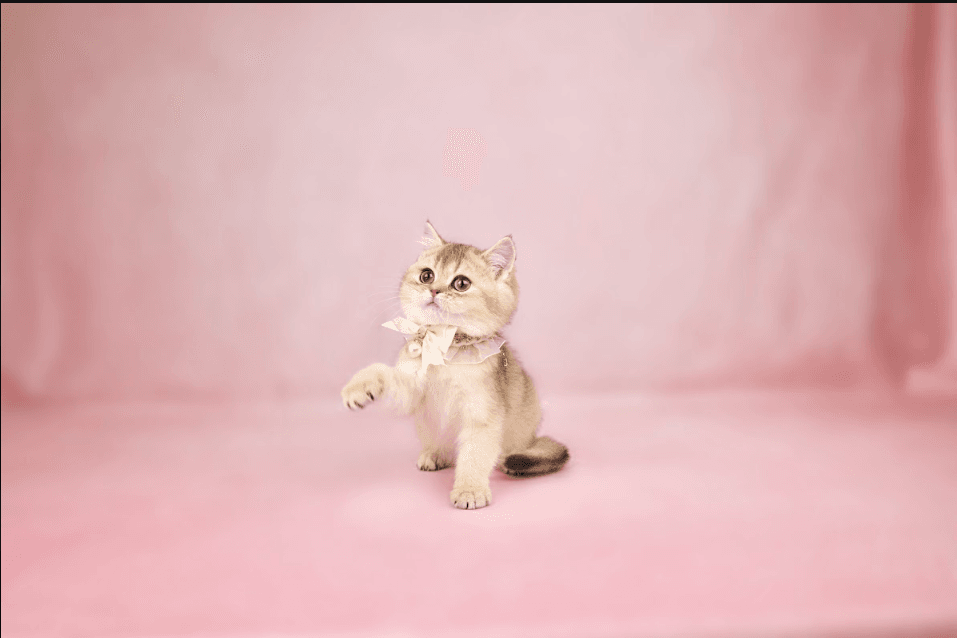
Full size arrives late. Many British Shorthairs are still filling out at two and are not finished until three, so resist the urge to compare your kitten against a photograph of an adult.
Vaccinations and Vet Visits on Schedule
The core series runs in intervals across the first months, with boosters after the initial course. A kitten should arrive with its record showing what has been given and when, so your own vet can continue rather than restart.
Book the first appointment within the first week at home. Cornell's vaccination overview explains why the timing is built the way it is and why the schedule should not be compressed.
Neutering or spaying is discussed at these visits and remains mandatory for pet kittens even where the procedure happens after rehoming. Buyers comparing British Shorthair kittens for sale in Canada should check which route their contract specifies, since it affects both cost and timing.
Litter Tray Habits in the First Months
Most kittens arrive already trained, and problems in the first months are almost always environmental rather than behavioural. Two trays for one cat is the usual recommendation, kept away from food and away from anything that makes sudden noise.
Keep the litter type the cattery used for the first few weeks. Changing brand, depth and location all at once is the most common cause of a kitten deciding the tray is no longer acceptable.
If accidents start after a settled period, treat it as a health question first. Advice on everyday care covers the routine observation that catches urinary problems early, and those need a vet rather than a correction. The AVMA’s guide to feline lower urinary tract disease lists the warning signs worth calling your vet about straight away.
Grooming Habits Worth Building Early
Start before the coat needs it. A two-minute comb every few days while the kitten is small teaches it that grooming is ordinary, which is worth far more than technique later.
Add nails every couple of weeks, an ear check weekly and tooth brushing as early as the kitten tolerates it. Introduce each one separately and stop while the kitten is still relaxed.
Longhairs need combing several times a week from the start, since a coat that mats once tends to mat again in the same places. A kitten that accepts a comb at four months rarely objects at four years.
Play, Socialisation and Sleep
Two short play sessions a day do more for temperament than a basket of toys. Wand toys that let the kitten chase, catch and finish a sequence work better than anything that moves on its own, and finishing with a small meal mirrors the natural pattern.
Socialisation means quiet, positive exposure to normal household life: the vacuum, the doorbell, visitors, being handled, going into a carrier. Carrier training in particular saves years of difficulty, and it costs nothing to leave the carrier open in the room with a blanket in it.
Kittens also sleep enormously, and interrupting that sleep is the fastest way to produce a fractious cat. A kitten asleep is a kitten growing, which is a useful thing to tell children. AAHA’s feline life stage guidelines recommend roughly thirty to sixty minutes of pleasant daily interaction at this age, spread across the sessions above.

The First Year Sets the Next Fifteen
Feed for growth, keep the vaccination schedule, protect the litter routine, make grooming boring, and guard the sleep. None of it is complicated, and all of it is easier to start than to correct. It is also the reason the best cat breeder in Canada will still take your call in month eight, and our enquiry page stays open to families long after pickup.
CatKing Cattery breeds British Shorthairs and British Longhairs from TICA, CFA and WCF registered lines in Ontario, and every kitten leaves litter box trained with a lifetime genetic disease warranty and lifetime consulting included. Families who reserve a British Shorthair for sale in Ontario keep that support for the life of the cat.
Speak to us about the kittens available now and we will walk you through the first year before you collect.
2026-09-30