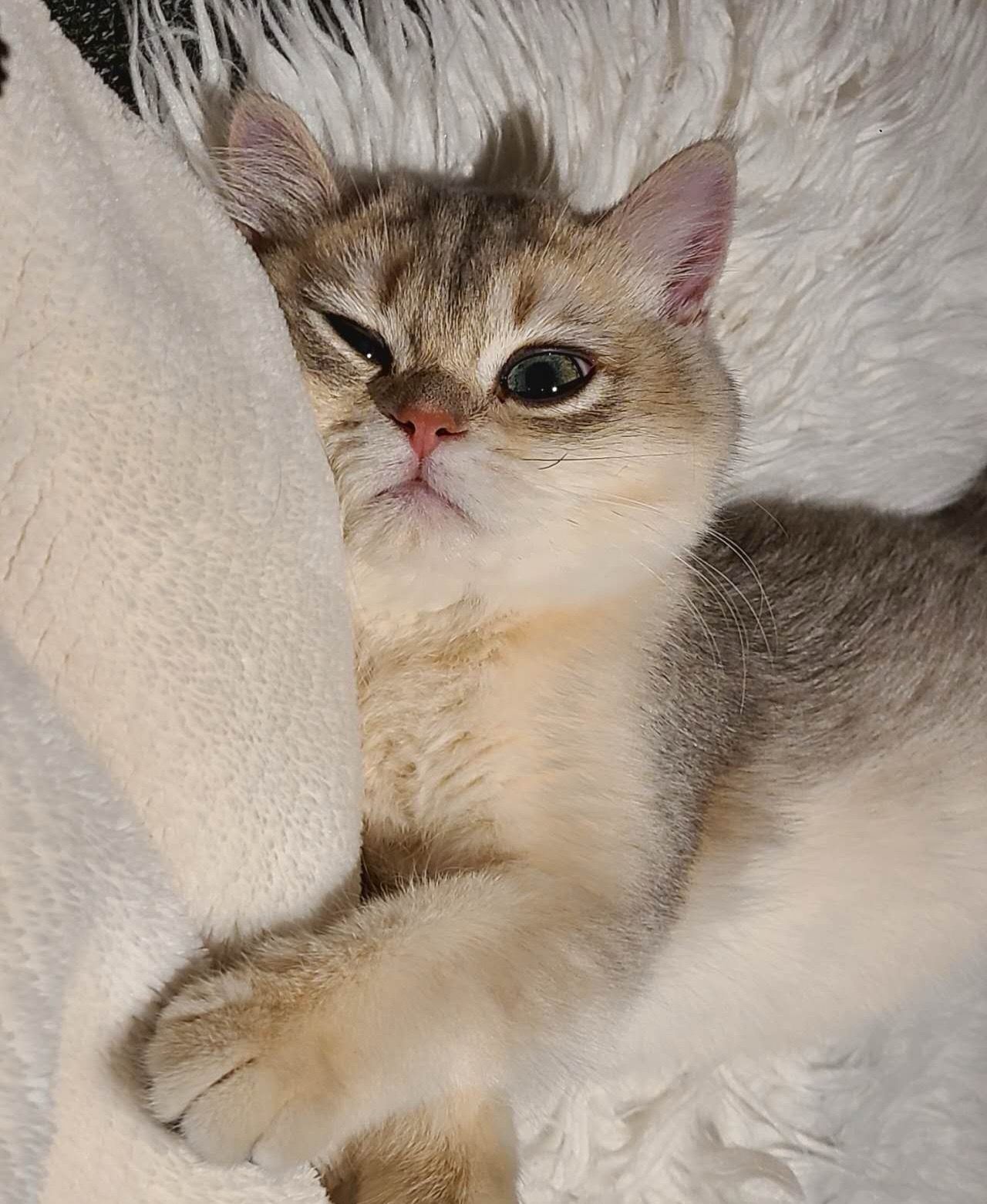
Why Choose a British Shorthair as Your Family Pet?
From: Catking Cattery
Why Choose a British Shorthair as Your Family Pet?
Families usually meet this breed in a photo first: the round face, the chubby cheeks, the plush coat that looks like a stuffed toy. Then they visit, hold one, and discover the part a photo cannot show. A British Shorthair is calm in your arms, steady on the floor, and content simply to be in the same room as you. We breed these cats in Toronto, and after placing kittens with hundreds of families, we can tell you exactly who this breed is right for, and, just as honestly, who it is not.
A temperament built for family life
The word we hear most from our families is "easy." British Shorthairs are affectionate without being demanding. They follow you from room to room, settle nearby while you work, and greet you at the door, but they rarely insist on being the centre of attention. Most are not true lap cats in the clingy sense; they would rather sit beside you than on you, and they ask for affection politely instead of shouting for it.
That steadiness is what makes them work so well with children. A well-bred, well-socialised British Shorthair is patient, tolerant of gentle handling, and slow to panic at household noise. They play, especially as kittens, but their play is measured rather than wild: a chase after a wand toy, a wrestle with a sibling, then a long, serious nap. For families who want a cat that joins in with daily life without turning the house upside down, this balance is hard to beat.
Adaptability: the cat that fits the home you already have
Some breeds need a particular kind of household. British Shorthairs mostly need a predictable one. They settle well in apartments and houses alike, adapt to working owners as long as someone is home for a good part of the day, and generally take new routines, visitors and other calm pets in their stride. They are not climbers by nature and they are not escape artists; a sturdy scratching post, a window seat and a few warm corners will satisfy most of them.
They are also a sensible choice for first-time cat owners. There is no complicated coat routine, no high-strung sensitivity to manage, and their communication is easy to read. When a British Shorthair has had enough petting, it simply walks away. Families tell us this honesty makes the breed relaxing to live with.
Health, and what responsible breeding does about it
British Shorthairs are a generally sturdy, long-lived breed, but no breed is free of inherited risk, and any breeder who tells you otherwise is selling you something. The conditions a careful breeder screens for include polycystic kidney disease (PKD), progressive retinal atrophy (PRA-pd) and autoimmune lymphoproliferative syndrome (ALPS). At CatKing, our breeding cats are genetically tested for all three: PKD, PRA-pd and ALPS.
Our breeding cats are show-level cats. Most of our parents hold champion titles, and those who do not carry the bloodlines of titled champions, which matters for more than looks: generations of evaluated breeding stock is how a breed stays sound. Every CatKing kitten goes home at 10 to 14 weeks with its first two FVRCP vaccinations, two veterinary health exams, deworming, TICA registration, 30 days of pet insurance, our health guarantee and a lifetime genetic disease warranty. We are registered with TICA, CFA and WCF.
The look: a teddy bear that grows up gracefully
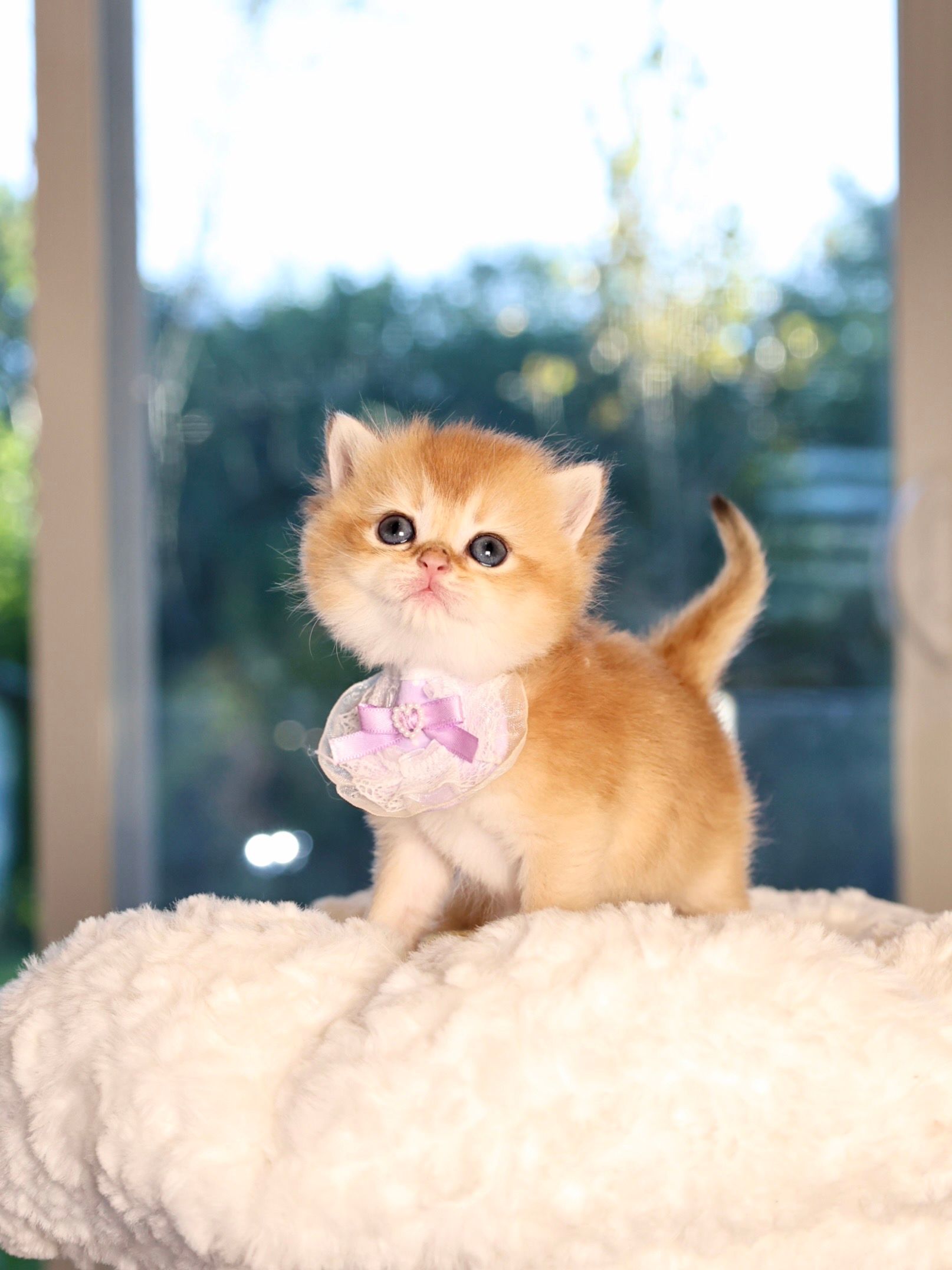
There is a reason this breed photographs like a plush toy. The British Shorthair has a broad, rounded body, a thick neck, full cheeks and large round eyes, all wrapped in a short, dense coat that stands away from the body and feels like deep velvet pile. Kittens are irresistibly round, and adults keep that softness while gaining real substance: this is a medium-to-large cat with quiet presence rather than elegance.
Colour changes the personality of the look. Golden shaded cats glow warm and bright-eyed; blue golden shaded cats look softer and more silvered; lilac golden shaded is the palest and rarest of the three; point colour cats pair a pale body with those striking blue eyes. Whichever colour draws you in, the build underneath should always be unmistakably British.
Grooming and the real cost of upkeep
Here the Shorthair keeps its "easy" promise. The coat does not mat, so a brush once a week is enough to remove loose hair and keep it plush, with a little extra during the spring and autumn coat changes. Expect moderate shedding on furniture; a dense coat releases hair steadily, and pale trousers will show it. Beyond brushing, care is the standard list: nails every couple of weeks, teeth and ears checked regularly, good food, and an annual vet visit.
The purchase price is the other honest number to plan around. At CatKing, pet British Shorthair kittens are $3,250 to $4,250 CAD before tax, set by colour and the kitten's own quality: golden shaded $3,250–$3,850, blue golden shaded $3,250–$4,250, lilac golden shaded $3,550–$4,250, and point colour $3,250–$4,250. Every kitten's exact price is on its profile, and the full price list is on our pricing page. That money buys the screening, raising and guarantees described above, which is where the real value sits.
Who a British Shorthair is NOT right for
Honesty builds better matches than a sales pitch, so here is the other side. If you want a cat that rides on your shoulder, follows you into the shower and sleeps glued to your chest, a British Shorthair may feel too independent. If you want an acrobat, look elsewhere: these are floor cats, not curtain climbers. They can also be quietly stubborn about food and routine, and adults are prone to gaining weight if free-fed, so measured meals matter. Finally, while they are social, they are not party animals; a chaotic household with constant grabbing by very young children and no quiet retreat is not their ideal home. If a longer, flowing coat sounds more like your cat, see our guide to choosing a British Longhair.
British Shorthair, Ragdoll or Maine Coon?
Families often narrow their search to these three, and all three are wonderful, in different directions. A Ragdoll is typically more openly affectionate and more likely to go limp in your arms; if being physically adored by your cat is the priority, a Ragdoll may suit you better. A Maine Coon is bigger, more playful into adulthood and more talkative, with a long coat that needs regular grooming. The British Shorthair sits between them in size but apart from both in style: quieter than the Maine Coon, more independent than the Ragdoll, and the lowest-maintenance coat of the three. Choose the cat whose ordinary Tuesday matches your ordinary Tuesday.
Bringing one home from CatKing
If this sounds like your family, the next step is simply to look at real kittens. Our available British Shorthair kittens are listed on our website with their own photos, prices and personalities, and visits are by appointment for waitlist families, so the kitten you meet is one you can actually reserve. Delivery within the GTA is free. Across Canada, our kittens fly safely with Air Canada Cargo, and for families in the United States we offer pickup in Toronto, meetings in Niagara Falls, NY or Detroit, or a flight nanny. We are a trustworthy cattery proven by hundreds of families, and you can read their real feedback on our website and across our social media before you ever contact us.
Frequently asked questions
Are British Shorthairs good with children? Yes, generally. They are patient, sturdy and tolerant of gentle handling, and their calm nature suits family noise. As with any cat, children should learn to pet gently and to let the cat walk away when it has had enough.
Do British Shorthairs shed a lot? They shed moderately, and more during the spring and autumn coat changes. The short coat never mats, and a weekly brush keeps loose hair under control.
How much does a British Shorthair kitten cost in Canada? At CatKing, pet kittens are $3,250–$4,250 CAD before tax, depending on colour and the individual kitten: golden shaded $3,250–$3,850, blue golden shaded $3,250–$4,250, lilac golden shaded $3,550–$4,250 and point colour $3,250–$4,250. For the full breakdown of what the price includes, see British Shorthair kitten prices in Canada.
Are British Shorthairs lap cats? Most prefer to sit beside you rather than on you. They are affectionate and like being near their people, but they are not usually clingy, and they ask for attention calmly.
What health testing do your breeding cats have? Our breeding cats are genetically tested for PKD, PRA-pd and ALPS, and every kitten leaves with our health guarantee and lifetime genetic disease warranty.
Can I visit before I reserve? Visits are by appointment for families on our waitlist. That keeps visits calm for the kittens and means the kitten you fall for is one you can genuinely reserve.
2026-11-08