Why Choose a British Longhair as Your Family Pet?
From: Catking Cattery
Why Choose a British Longhair as Your Family Pet?
Every British Longhair family we know started the same way: they fell for a photograph of that coat. The flowing fur, the full ruff around the face, the tail like a plume. Then, usually in the same conversation, comes the honest question: "But how much work is it, really?" This guide is our straight answer. Under the coat is the same calm, solid British temperament families love, and the coat itself asks for something specific and entirely manageable, as long as you go in with your eyes open.
The cat underneath the coat
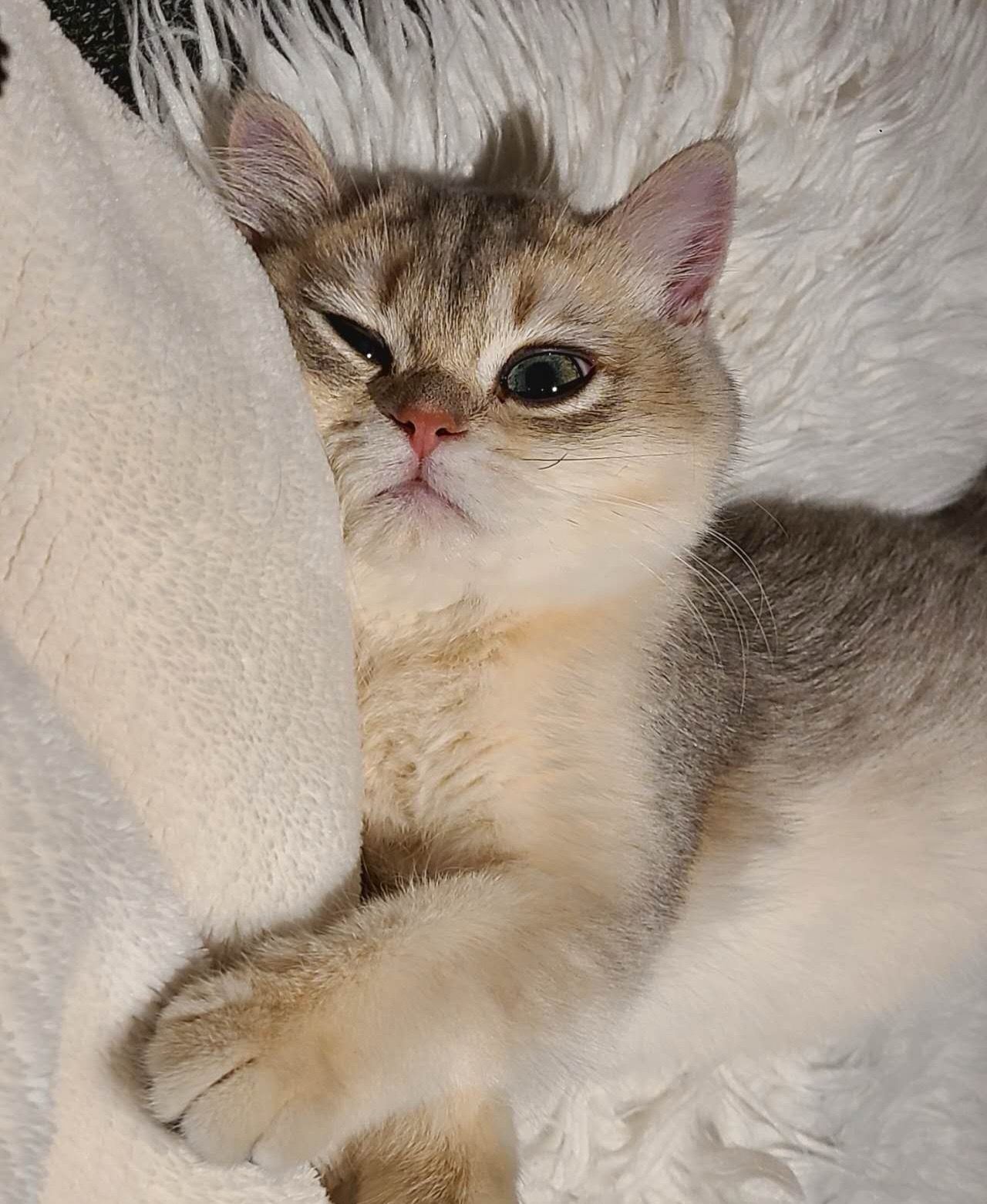
Strip away the glamour and a British Longhair is a British cat: round-faced, broad-bodied, even-tempered and quietly affectionate. They are companions rather than shadows. A Longhair will choose a favourite spot in the room you are in, supervise your day from it, come over for a proper cuddle on its own schedule, and purr like an engine when it does. They are gentle with children who handle them respectfully, polite with visitors, and generally relaxed about the ordinary chaos of a family home.
Because they are composed rather than high-strung, they adapt well to apartments and to owners who work, provided someone is home for a fair part of the day and the cat has company, toys and warm places to claim. Kittenhood brings the usual bursts of play, but adults settle into that trademark British routine: breakfast, a short game, a long nap in the best sun patch, repeat.
Let us talk about the coat honestly
This is the section most breeder websites skip, and it is the one that matters most. A British Longhair's coat is long, dense and surprisingly soft, with a thick undercoat underneath the flowing top layer. It is beautiful, and it is not self-maintaining.
The brushing reality. Plan on a proper comb-through two or three times a week, about five to ten minutes each, working through the armpits, belly, behind the ears and the britches, because that is where mats start. A steel comb matters more than a brush: brushes glide over the top while tangles quietly build underneath. Kittens who are combed gently from their first weeks grow into adults who treat grooming as a cuddle session, which is how we start them.
The shedding reality. A dense double coat sheds, and twice a year, in spring and autumn, it sheds a lot, as the undercoat turns over. During those weeks, daily combing and a lint roller by the door become part of life. Hair will land on sofas, carpets and dark clothing. If loose fur on your black coat genuinely distresses you, this is the moment to choose the Shorthair instead.
The matting reality. Skip combing for a few weeks and the undercoat will felt into mats, especially in the friction spots named above. Small tangles tease out with patience; established mats are uncomfortable for the cat and often need a groomer or vet to remove safely. The good news is that this is entirely preventable with the routine above. In our experience, families who comb twice a week simply never see a mat.
Add the usual care on top: nails every couple of weeks, teeth and ears checked regularly, quality food, an annual vet visit, and a professional groom once or twice a year if you like the coat at its absolute best. That is the whole contract. Ten minutes, twice a week, in exchange for the most huggable cat in the house.
Health and breeding standards
A long coat does not change the breed's health picture, but it does make choosing a careful breeder matter even more, because you are trusting that breeder's lines for the next fifteen years or so. The inherited conditions a responsible British breeder screens for are polycystic kidney disease (PKD), progressive retinal atrophy (PRA-pd) and autoimmune lymphoproliferative syndrome (ALPS). Our breeding cats at CatKing are genetically tested for all three: PKD, PRA-pd and ALPS.
Our breeding cats are show-level cats. Most of our parents hold champion titles, and those who do not come from titled champion bloodlines, the families behind them evaluated in the show ring generation after generation. CatKing is registered with TICA, CFA and WCF, and every kitten goes home at 10 to 14 weeks with two FVRCP vaccinations, two veterinary health exams, deworming, TICA registration, 30 days of pet insurance, our health guarantee and a lifetime genetic disease warranty.
The look, and what it costs
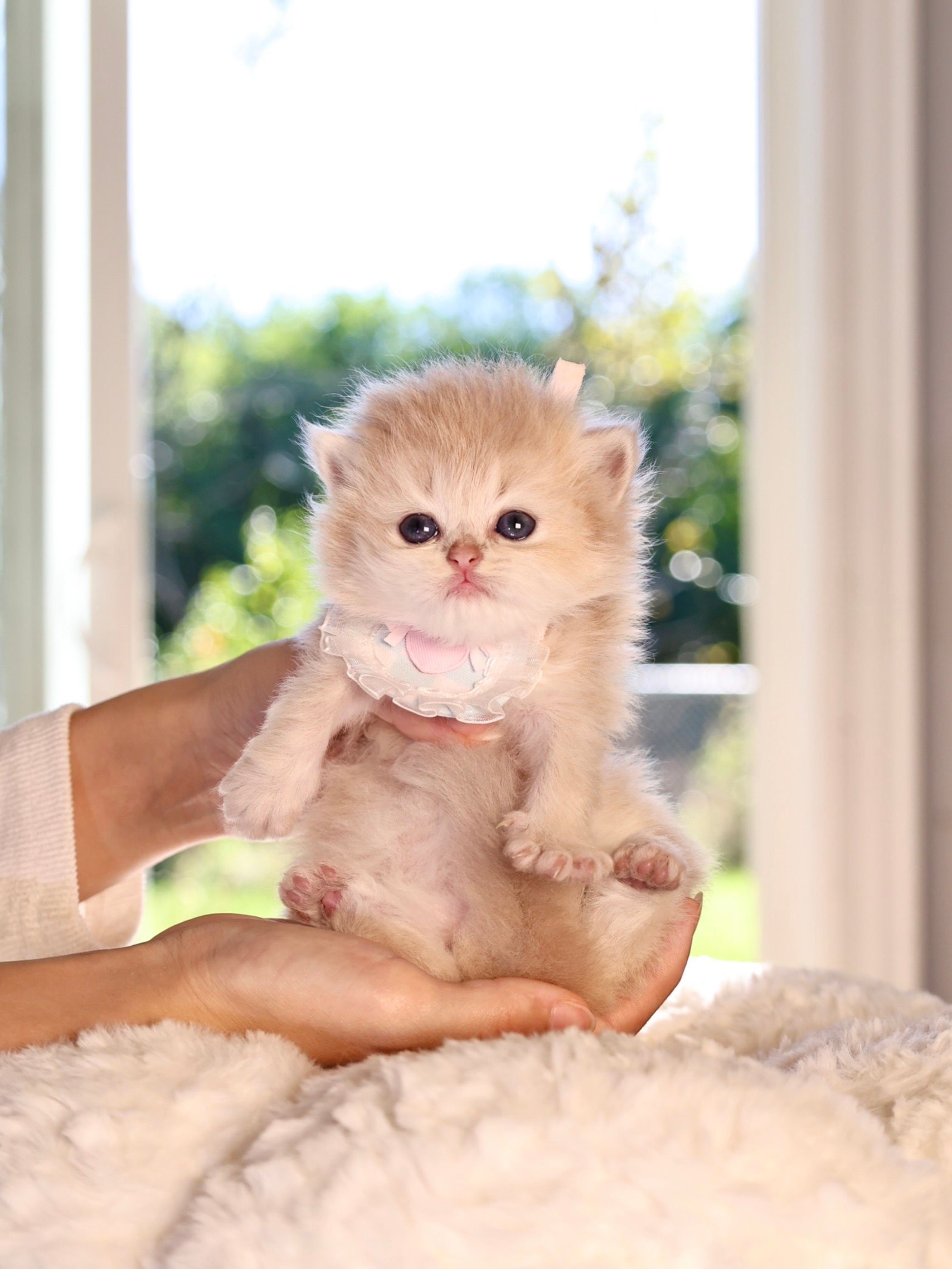
If the Shorthair is a teddy bear, the Longhair is a teddy bear in formal dress. The same round eyes and full cheeks sit inside a frame of fur; the chest carries a ruff, the tail fans out behind, and even the paws sprout tufts. In golden shaded, the coat glows; in blue golden shaded it turns soft and silvery; lilac golden shaded is the palest wash of gold; and point colour pairs the pale, shaded body with deep blue eyes. It is a cat people stop mid-sentence to admire, and owners never quite get used to it.
Price surprises people, in a pleasant way. Longhairs sit in the upper half of the kitten market, and many breeders add a longhair premium of $200 to $500 on top of their shorthair prices. CatKing does not charge one. Our British Longhair kittens are $3,250 to $4,250 CAD before tax, the same range as our Shorthairs, priced by colour and the kitten's own quality: golden shaded $3,250–$3,850, blue golden shaded $3,250–$4,250, lilac golden shaded $3,550–$4,250, and point colour $3,250–$4,250. The coat adds brushing time to your week, never dollars to your invoice, and each kitten's exact price is listed on its profile.
Who should choose the Shorthair instead
We mean this kindly, because a good match matters more than a sale. If your schedule regularly swallows whole weeks, if anyone in the home has a real sensitivity to cat hair everywhere, or if the sight of fur on furniture will quietly irritate you every day, the British Shorthair gives you the same temperament, the same teddy-bear face and the same health standards with a fraction of the upkeep. Choose the Longhair when you look at that coat and think "worth it," not when you hope the coat will somehow be less work than described here. For the same honest comparison from the other side, see our guide to choosing a British Shorthair.
British Longhair, Ragdoll or Maine Coon?
These three share the longhair shortlist, and the differences are practical. A Ragdoll's coat is silky with far less undercoat, so it tangles less and sheds less, and the cat is usually more physically clingy, happiest in your arms. A Maine Coon is the biggest of the three, the most playful and conversational, with a shaggier coat that needs steady combing too. The British Longhair is the quiet, composed option: more independent than a Ragdoll, calmer and rounder than a Maine Coon, and the only one of the three with that dense, plush, stand-away-from-the-body fur. Pick by the grooming routine you will actually enjoy and the temperament that fits your evenings.
Meeting your Longhair at CatKing
Our available British Longhair kittens are on our website with their own photos, prices and personality notes, and visits are by appointment for waitlist families, so meetings are unhurried and the kitten you fall for is one you can reserve. We deliver within the GTA free of charge. For families elsewhere in Canada, kittens fly with Air Canada Cargo, and families in the United States can pick up in Toronto, meet us in Niagara Falls, NY or Detroit, or use a flight nanny. We are a trustworthy cattery proven by hundreds of families, with their real feedback on our website and across our social media, and we are happy for you to read every word of it before joining the waitlist.
Frequently asked questions
How much grooming does a British Longhair really need? A thorough comb-through two or three times a week, five to ten minutes each, concentrating on the armpits, belly, behind the ears and the britches. During the spring and autumn coat changes, comb daily for a few weeks.
Do British Longhairs shed more than British Shorthairs? Yes. The long, dense double coat sheds year-round and heavily during its twice-yearly coat change. Regular combing removes most loose undercoat before it reaches your furniture, but some hair in the home is unavoidable.
Does the long coat cost extra at CatKing? No. Many breeders add $200 to $500 for a longhair; we price the kitten, not the coat. Our British Longhairs are $3,250–$4,250 CAD before tax, the same range as our Shorthairs. See our guide to British Shorthair kitten prices in Canada for the full breakdown.
Are British Longhairs good with children? Yes. They share the British family's calm, patient temperament and do well with children who handle them gently and respect the cat's choice to walk away.
What health testing do your breeding cats have? Our breeding cats are genetically tested for PKD, PRA-pd and ALPS. Every kitten goes home with two FVRCP vaccinations, two vet health exams, our health guarantee and a lifetime genetic disease warranty.
Can I visit a kitten before reserving? Visits are by appointment for families on our waitlist, which keeps visits calm for the kittens and ensures the kitten you meet is available for you to reserve.
2026-11-08